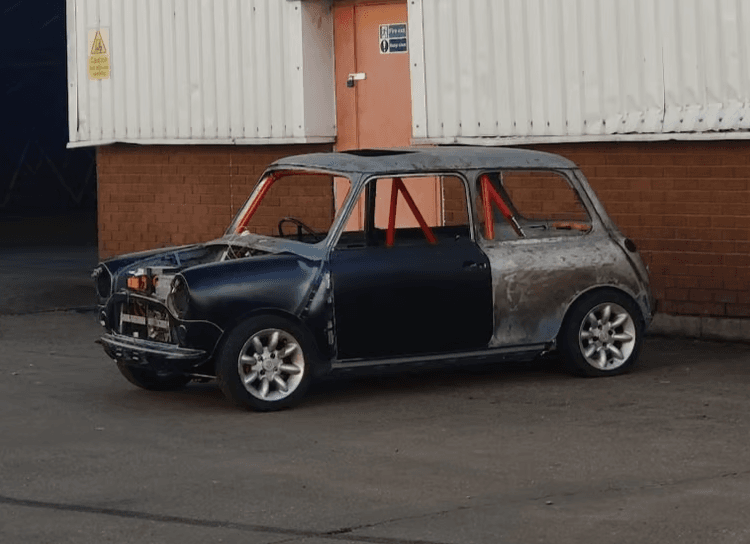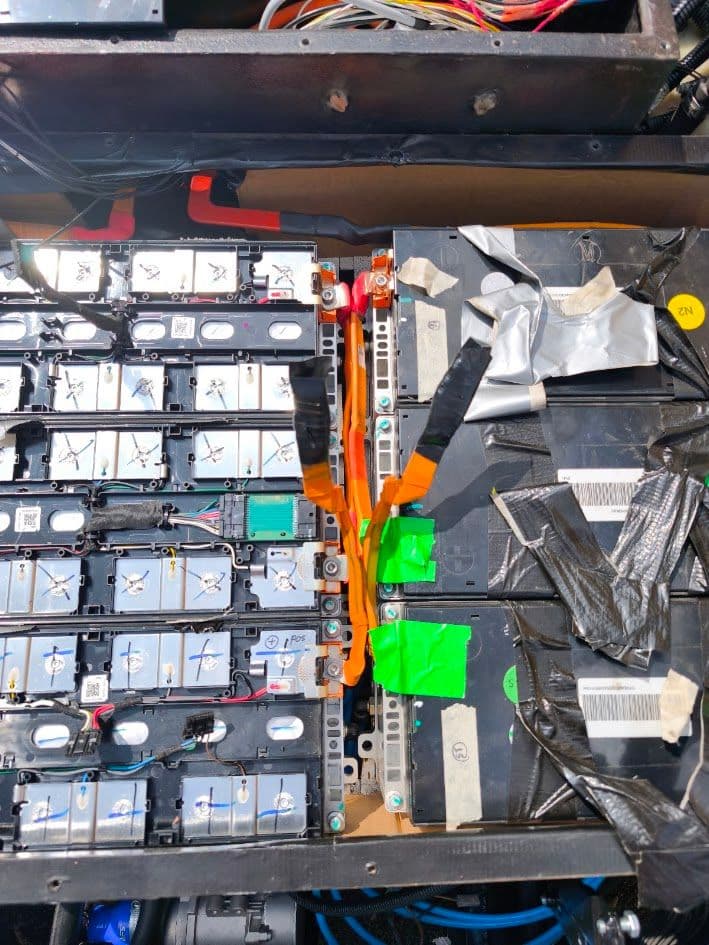
A good EV conversion should feel simple to use. Turn it on, select drive, drive the vehicle, charge it and repeat. When the engineering underneath is poor, the owner usually experiences the opposite: random shutdowns, charging faults, blown fuses, warning lights, overheating, poor range or a car that nobody wants to work on.
The problem is often not one failed component. It is usually poor integration. The battery, motor, inverter, charger, BMS, contactors and 12V system need to work as one vehicle.
Poor high-voltage cable routing
High-voltage cables should be routed away from sharp edges, heat, moving parts and water traps. They should be supported properly and protected from vibration and road debris.
Common problems include cables rubbing on metal, unsupported heavy cable runs, exposed shielding, badly crimped terminals, incorrect gland use and cables that cannot be inspected without major disassembly.
No clear shutdown strategy
An EV conversion needs a clear strategy for when the high-voltage system is allowed to energise. The system should check key conditions before closing contactors and should shut down safely if a serious fault is detected.
Poor builds often have contactors controlled by simple switches with little or no logic. That may work during a quick test, but it does not create a reliable vehicle.
BMS not integrated properly
The BMS should do more than display cell voltages. It should be part of the control system. The inverter, charger and vehicle controller should respect battery limits for charge current, discharge current, voltage and temperature.
If the BMS cannot reduce power, stop charging or prevent contactor closure when needed, the battery is not being properly protected.
Charging problems
Charging faults are common on unfinished conversions. Problems can come from poor charger communication, incorrect charge limits, missing interlocks, 12V supply issues, contactor faults, temperature limits or wiring problems around the charge port.
A good charging system should be predictable. It should tell the owner why it is not charging rather than simply refusing to start.
Cooling problems
Motors, inverters, chargers and batteries all have temperature limits. Some conversions use pumps, radiators or coolant layouts that are too small, badly routed or difficult to bleed.
A car may work well during a short drive but fail on a hot day, when climbing hills, during motorway use or while charging. Thermal testing matters.
Weak 12V systems
Even though the car is electric, the 12V system is still critical. Contactors, ECUs, pumps, fans, relays, brake systems, lights and control modules all depend on stable low-voltage power.
A weak DC-DC converter, poor grounding, undersized wiring or bad relay logic can make the whole vehicle unreliable.
No diagnostics or documentation
The most frustrating conversions are the ones with no wiring diagrams, no fault codes, no labels and no explanation of how the system works. Without diagnostics, every fault becomes a guessing game.
A professional build should include useful labels, accessible fuses, wiring information, software notes and a way to read faults from key systems.
How VASS Technology approaches rectification
When reviewing an existing EV conversion, we start by understanding the system architecture. We look at the battery, contactors, BMS, charger, inverter, DC-DC converter, high-voltage routing, cooling system and 12V control logic.
The aim is not just to make the fault disappear. The aim is to make the vehicle safer, easier to diagnose and more reliable for the owner or workshop supporting it.
VASS Technology can assist with high-voltage diagnostics, EV conversion rectification, wiring review, CAN bus investigation, charger faults, BMS integration and control system improvements.
Have an unfinished or unreliable EV conversion? Contact VASS Technology for diagnostic and rectification support.
FAQ section
Can an unfinished EV conversion be repaired?
Often yes, but the first step is a proper inspection. Some projects need small fixes, while others need major rewiring, battery work or control system redesign.
Why does my EV conversion keep blowing fuses?
Possible causes include cable damage, inverter or charger faults, incorrect precharge, contactor issues, short circuits or incorrect fuse sizing. High-voltage diagnosis should be handled carefully by someone competent.
Why will my EV conversion not charge?
Charging problems can come from the charger, BMS, contactors, charge port wiring, 12V supply, temperature limits, communication faults or software limits.
What information helps diagnose an EV conversion?
Useful information includes wiring diagrams, battery module details, BMS type, inverter and charger models, fault codes, contactor layout, fusing, cooling layout and a clear description of the symptoms.