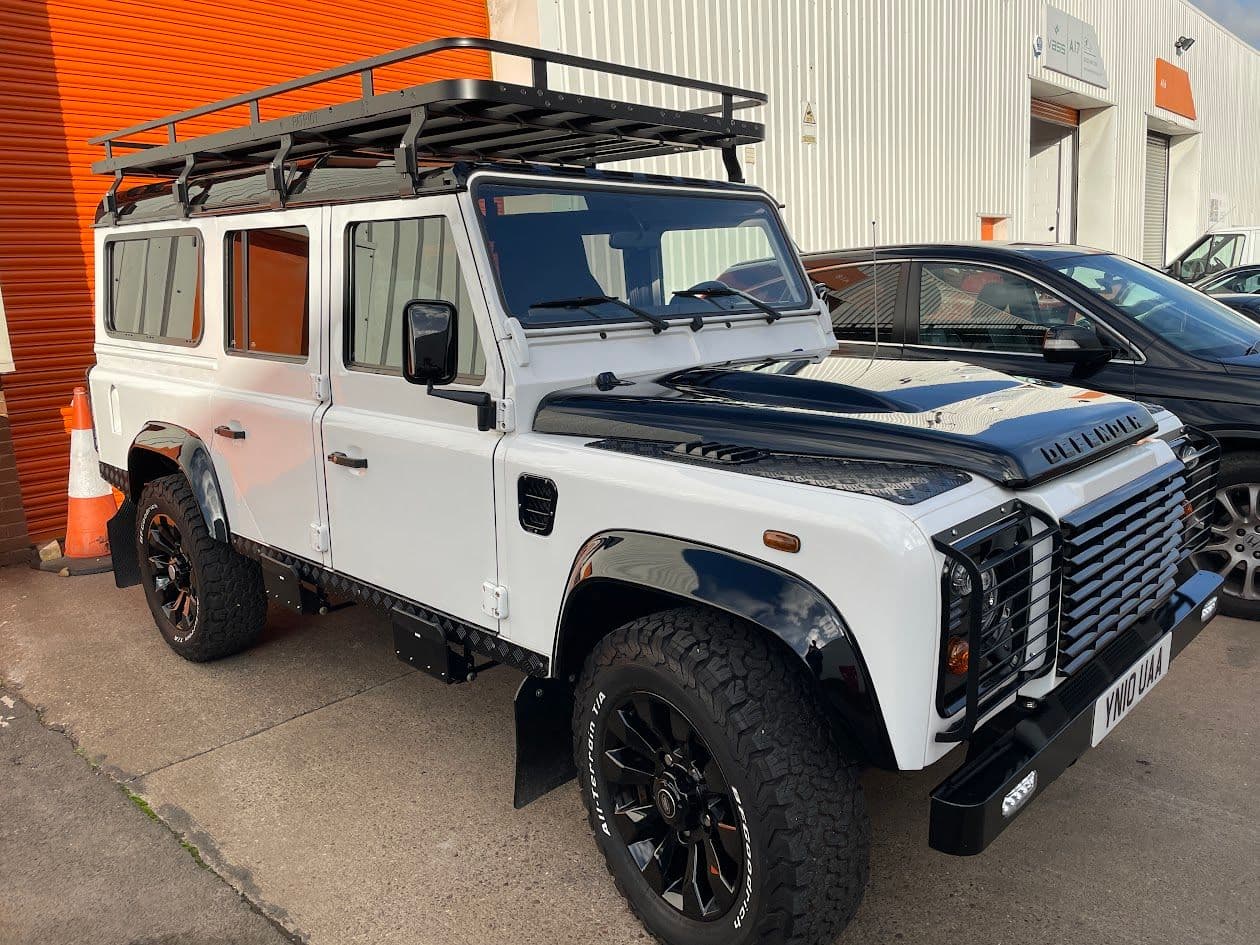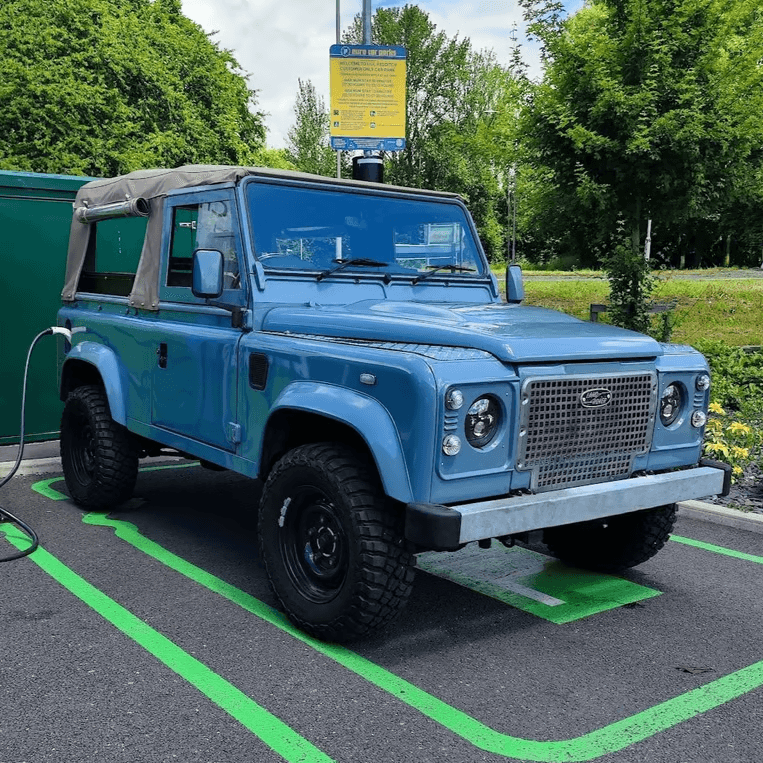
A Land Rover Defender EV conversion is not the same as converting a small city car. The Defender is heavy, boxy, often used for towing or off-road driving, and many owners want to keep the character of the vehicle rather than turn it into a silent road-only toy.
A good Defender EV conversion kit should be judged on more than power and range. It should retain the useful parts of the Defender platform, package the battery safely, manage heat properly and provide diagnostics that make the vehicle serviceable in the future.
A good kit starts with the intended use
Before choosing batteries and motors, the first question should be: what does the Defender need to do? A restored daily driver, an off-road vehicle, a show build and a touring 110 all need different specifications.
For some owners, 100 miles of real-world range may be enough. Others may want long-distance touring, towing ability, fast charging, air conditioning and strong motorway performance. The kit should be designed around the use case, not around whatever parts are easiest to buy.
Retaining proper 4WD is a major advantage
Many classic Defender owners do not want to lose the reason they bought the vehicle in the first place. A good Defender EV conversion should consider how to retain permanent 4WD, low range and centre differential lock where possible.
One approach is to drive into the original transfer case or a suitable replacement, allowing the vehicle to keep its familiar 4WD behaviour. This can be more complex than fitting a standalone EV drive unit, but it can produce a much more useful Defender for real-world owners.
Battery packaging matters more than headline capacity
Battery capacity is important, but packaging and safety matter just as much. A battery pack should be mounted securely, protected from impact, isolated from water and debris, cooled or heated where required and accessible for service.
A large battery may sound impressive, but if it is badly mounted or difficult to inspect, it can create problems later. A well-designed pack should include proper fusing, contactors, BMS communication, temperature monitoring and a clear shutdown strategy.
Cooling and heating should not be an afterthought
Defenders often have large frontal area, heavy tyres and high energy demand at motorway speeds. The battery, inverter, motor and charger all need sensible thermal management if the vehicle is expected to work reliably.
Battery heating can also matter in cold weather. A pack that is too cold may have limited charging or reduced performance. For a higher-end conversion, the thermal system should be designed as part of the vehicle, not added at the end as a fix.
Charging should match how the owner uses the vehicle
A Defender used locally may only need reliable AC charging. A touring Defender may benefit from faster AC charging, DC fast charging, or a carefully planned future upgrade path.
The charging system should include safe control of contactors, precharge, charge limits, temperature limits and fault handling. A charge port that looks neat is only one part of the job; the control strategy behind it matters more.
Diagnostics make the vehicle easier to own
A proper EV conversion should not be a mystery box. The owner or workshop should be able to see battery status, faults, charger behaviour, inverter limits, temperature information and state of charge.
Diagnostics are especially important for bespoke vehicles. Without clear data, even a simple fault can become expensive to trace.
What should be included in a Defender EV kit?
- Motor and inverter package matched to the vehicle's use
- Battery pack or battery integration plan
- BMS and safety logic
- Contactors, precharge and high-voltage junction hardware
- Onboard charger and DC-DC converter
- Cooling and heating circuits where required
- Motor mounts, adapters and drivetrain hardware
- CAN bus integration and diagnostics
- High-voltage cable routing, fusing and labelling
- Clear service documentation
The best kit is the one that feels engineered
The finished Defender should feel like a complete vehicle. It should start consistently, charge safely, drive smoothly, protect itself when there is a fault and be possible to diagnose later.
At VASS Technology, we focus on practical Defender EV solutions that keep the vehicle useful, serviceable and properly integrated. Power is only one part of the story. The real value is in the engineering around it.
Planning a Defender EV conversion? Speak to VASS Technology about a practical, serviceable specification.
FAQ section
Can a Land Rover Defender be converted to electric?
Yes. A Defender can be converted to electric, but it requires careful planning because of the vehicle's weight, drivetrain layout, packaging space and intended use.
Can an electric Defender keep 4WD?
Yes, it is possible to retain 4WD by designing the conversion around the transfer case or another suitable drivetrain layout. This is often more useful for Defender owners than a road-only setup.
What range can an electric Defender achieve?
Range depends on battery size, tyres, weight, speed, aerodynamics and driving style. A Defender has high drag, so real-world range should be estimated carefully rather than using ideal figures.
What is the most important part of a Defender EV kit?
The most important part is system integration. The motor, battery, charging, cooling, safety systems and diagnostics must work together as a complete vehicle.