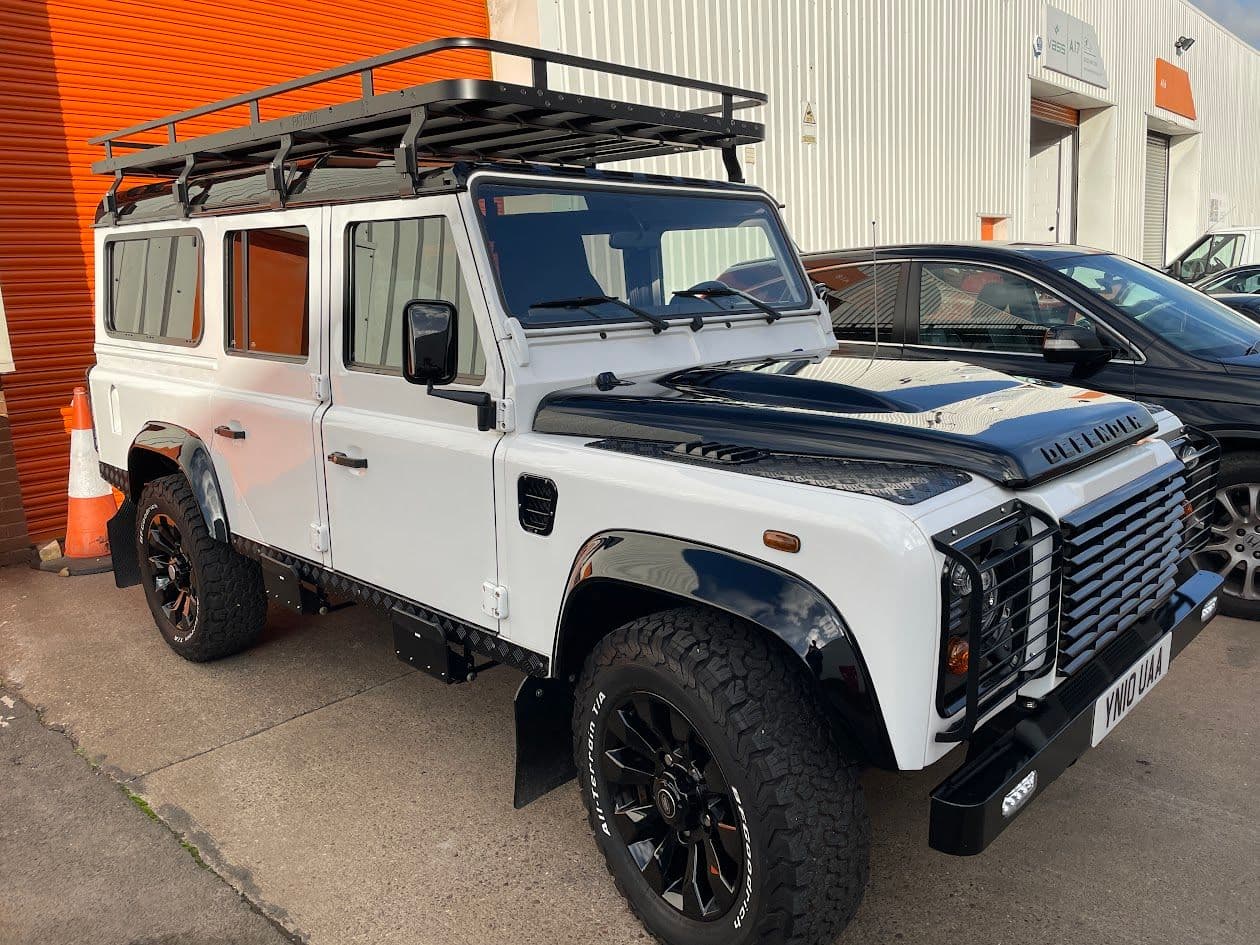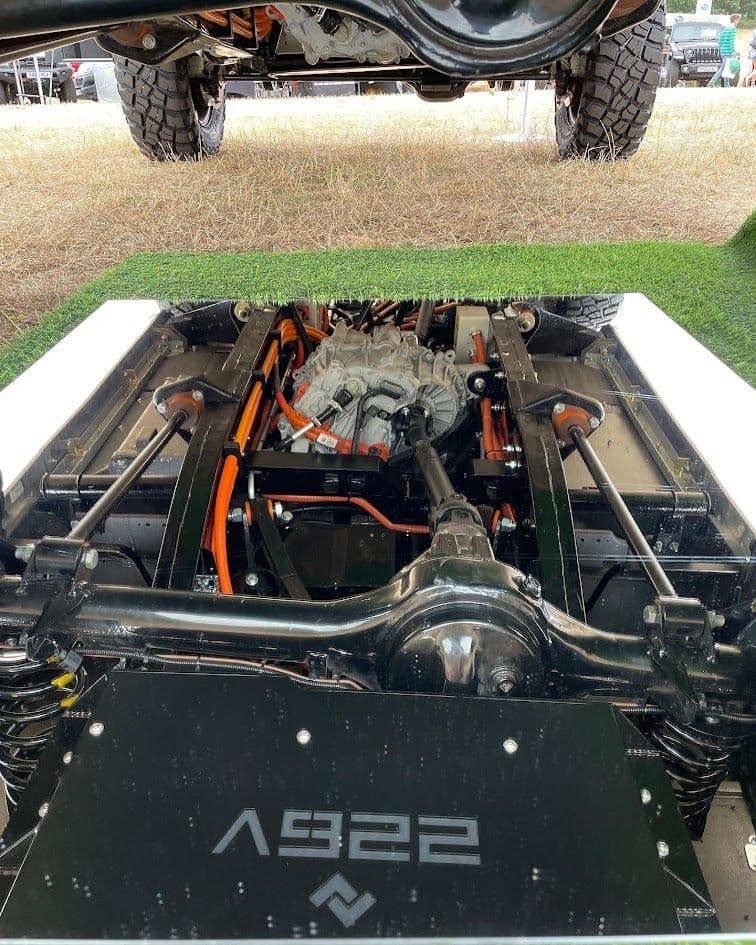
Yes, an electric Land Rover Defender conversion can keep 4WD, but it must be designed around the drivetrain from the beginning. This is one of the biggest differences between a proper Defender EV conversion and a simple electric restomod.
Many Defender owners do not want a road-only vehicle. They want the instant torque and smoothness of electric drive while keeping the original usefulness of the Land Rover platform.
Why 4WD matters in a Defender EV
The Defender's appeal is not just the body shape. It is the driving position, the rugged chassis, the transfer case, the ability to work off-road, and the option of low range when the vehicle is loaded or used on difficult terrain.
If a conversion removes those features, it may still be a nice electric vehicle, but it may no longer feel like a proper Defender.
Option 1: drive the transfer case
One practical route is to connect the electric motor package to the transfer case. This allows the vehicle to retain its front and rear propshafts, axle layout and 4WD behaviour.
This approach can also retain high and low range depending on the transfer case and adapter design. It does require careful engineering because the motor speed, reduction ratio and transfer case input speed must work together.
Option 2: use independent EV drive units
Another approach is to use one or more EV drive units. For example, a vehicle could use a front and rear electric drive unit to create electric all-wheel drive.
This can work well in some modern platforms, but it may not be the best choice for a classic Defender if the goal is to retain the original axle and transfer case layout. It can also require more custom suspension, packaging and control work.
Low range is still valuable with electric torque
Electric motors produce strong torque from low speed, so some people assume low range is no longer needed. For road use, that may be true. For off-road control, towing, steep terrain or heavy vehicles, low range can still be useful.
Low range reduces drivetrain stress and gives better control at very low vehicle speeds. For a working Defender or an off-road build, keeping it can be a major advantage.
The reduction ratio must be chosen carefully
An electric motor may spin much faster than the original combustion engine. This means the conversion often needs a reduction stage before the transfer case, or a motor package with a suitable internal reduction.
The ratio affects acceleration, motorway speed, motor efficiency, drivetrain torque and component stress. Too short a ratio can limit top speed. Too tall a ratio can reduce low-speed control or overload the motor.
What about propshafts and axles?
Keeping the original transfer case layout can allow the vehicle to retain familiar propshaft and axle positions, but the details still need checking. Motor placement, adapter length and gearbox removal can all affect propshaft length and angles.
A good conversion should avoid creating vibration, harshness or unsupported drivetrain loads. The motor and adapter system should be mounted properly and aligned with the rest of the driveline.
The software is just as important as the hardware
An electric 4WD Defender needs smooth torque delivery. The control system should manage throttle response, torque limits, regenerative braking behaviour and safety limits so the vehicle feels predictable.
Instant torque is useful, but uncontrolled torque can damage driveline parts or make the vehicle unpleasant to drive. Tuning matters.
The best solution depends on the customer
A show car, a daily driver, a farm vehicle and a long-range touring Defender may all need different drivetrain decisions. The best electric Defender is not the one with the biggest motor. It is the one that matches the owner's real use.
VASS Technology can help plan and engineer electric Defender drivetrain layouts that keep the vehicle useful, serviceable and true to its original purpose.
Want an electric Defender that still behaves like a Defender? Contact VASS Technology to discuss the drivetrain layout.
FAQ section
Can an electric Defender keep low range?
Yes, if the conversion is designed to retain a transfer case with low range. This requires suitable motor speed, reduction ratio and mechanical integration.
Is 4WD necessary in an electric Defender?
It depends on the vehicle's use. For a road-only restomod it may not be essential, but for a working, towing or off-road Defender it can be very valuable.
Does electric torque replace the need for low range?
Not always. Electric torque helps, but low range can still improve low-speed control and reduce drivetrain stress in off-road or towing situations.
Can a Tesla drive unit be used in a Defender?
A Tesla drive unit can be used in some conversions, but the packaging, gearing, suspension layout and 4WD requirements need careful consideration.