Client goal
The problem to solve
Create an extreme-range electric vehicle capable of driving from the top of Scotland to Land’s End and setting a new benchmark for EV range.
Project case study
EV development study / extreme range concept
An ambitious development study for a classic Range Rover 6x6 EV intended to attempt an extreme UK range record. The concept explored five VW battery packs in parallel, lightweighting work and control strategies for safely managing multiple large EV packs.
Discuss a related project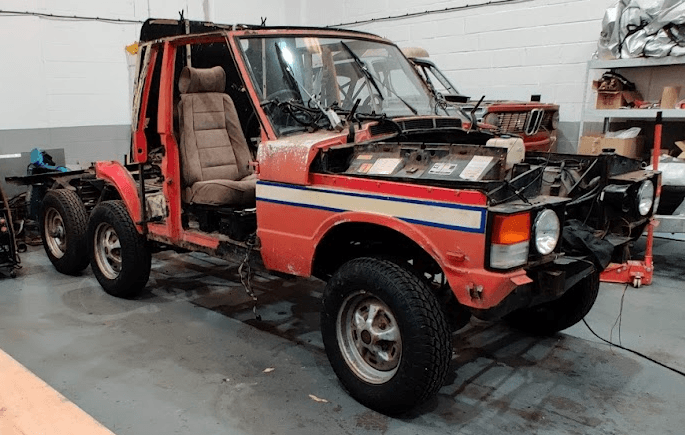
Engineering overview
Client goal
Create an extreme-range electric vehicle capable of driving from the top of Scotland to Land’s End and setting a new benchmark for EV range.
The brief
Explore the feasibility of an ultra-range EV conversion using a classic Range Rover 6x6 platform, including weight reduction, battery packaging and the control strategy required for using five VW battery packs in parallel.
Scope of work
Engineering challenge
Practical outcome
The project stopped before the full electrification stage, so it should be presented as a development study rather than a completed conversion. Even so, it was valuable because it pushed the thinking around parallel battery systems, safe control logic and the practical limits of extreme EV range projects.
For similar clients
This project is useful for clients considering unusual battery architectures, parallel packs or extreme-range specialist vehicles. It shows the importance of control strategy before fabrication begins, especially when connecting multiple large EV battery packs together.
Start a conversation
Share the vehicle or system, its current condition, the work already completed and the outcome you need. VASS can help define the next engineering step.